Low Hanging Fruit SEO: The Smart Strategy for Faster Rankings and Sustainable Organic Growth 76
Introduction to Low Hanging Fruit SEO
Search engine optimization has become one of the most competitive aspects of digital marketing. Businesses, bloggers, and website owners are constantly searching for ways to improve their rankings without spending years building authority. This is where low hanging fruit SEO becomes an essential strategy.
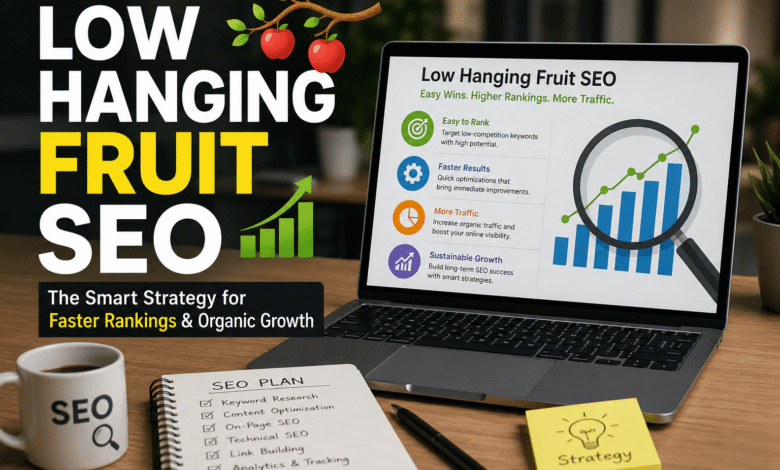
Low hanging fruit SEO refers to identifying opportunities that are easier to achieve compared to highly competitive keywords and search terms. Instead of targeting extremely difficult keywords dominated by large websites, this approach focuses on keywords, pages, and optimization opportunities that can generate quick wins with relatively less effort.
The concept is similar to picking fruit from the lower branches of a tree. These opportunities are easier to reach and provide faster results. For website owners who want to increase organic traffic efficiently, this strategy can significantly improve visibility and search performance.
In this comprehensive guide, we will explore everything you need to know about low hanging fruit SEO, including its benefits, strategies, best practices, and how it can help websites grow faster in search engines.
What Is Low Hanging Fruit SEO?
Understanding the Core Concept
Low hanging fruit SEO is the process of identifying search opportunities that require less effort to rank for while still providing valuable traffic. These opportunities often include:
- Keywords with low competition
- Pages already ranking on the second page of search results
- Existing content that requires minor optimization
- Long-tail search queries
- Underutilized internal linking opportunities
Rather than investing resources into highly competitive terms, marketers focus on opportunities that have a higher chance of success.
Why It Matters
Many websites waste time targeting keywords that are nearly impossible to rank for. By focusing on easier opportunities, website owners can generate traffic faster and build authority over time.
This strategy allows businesses to achieve measurable results without requiring massive budgets or years of effort.
Benefits of Low Hanging Fruit SEO
Faster Ranking Improvements
One of the biggest advantages of low hanging fruit SEO is speed. Since the competition is lower, search engines may recognize improvements more quickly.
Pages that already rank between positions 11 and 20 often require only small adjustments to move onto the first page.
Better Return on Investment
SEO campaigns can be expensive and time-consuming. By prioritizing opportunities with higher success rates, businesses can maximize their resources and achieve better outcomes.
Increased Organic Traffic
Small ranking improvements can produce substantial traffic gains. Moving from page two to page one often results in significantly more clicks and visibility.
Stronger Website Authority
As more pages begin ranking successfully, the overall authority of the website grows. This creates a positive cycle where future content becomes easier to rank.
How to Identify Low Hanging Fruit SEO Opportunities
Analyze Existing Rankings
One of the most effective ways to discover opportunities is by reviewing current keyword rankings.
Look for pages that rank:
- Between positions 11 and 20
- Between positions 5 and 15
- For keywords with decent search volume
These pages are already showing relevance to search engines and may need only minor improvements.
Focus on Long-Tail Keywords
Why Long-Tail Keywords Matter
Long-tail keywords are more specific search phrases that generally have lower competition.
Examples include:
- Best SEO strategy for small businesses
- How to improve website rankings quickly
- Affordable search engine optimization tips
These searches often have clear user intent, making them easier to target effectively.
Review Search Intent
Understanding user intent is crucial when identifying opportunities.
Search intent typically falls into four categories:
- Informational
- Navigational
- Commercial
- Transactional
Content that closely matches user intent often performs better in search results.
Optimizing Existing Content for Better Results
Refresh Outdated Information
Search engines prefer content that remains accurate and relevant.
Updating articles with:
- New statistics
- Recent trends
- Improved examples
- Additional insights
can help improve rankings and user engagement.
Improve Content Depth
Many pages rank poorly because they do not fully answer user questions.
Adding detailed explanations, examples, and supporting information can make content more comprehensive and valuable.
Enhance Readability
Content should be easy to read and understand.
Best practices include:
- Short paragraphs
- Clear headings
- Bullet points
- Logical structure
Improved readability enhances user experience and increases engagement.
The Role of Internal Linking in Low Hanging Fruit SEO
Strengthening Content Relationships
Internal links help search engines understand how pages connect within a website.
Strategically linking relevant pages can transfer authority and improve rankings.
Improving User Navigation
Well-structured internal linking encourages visitors to explore additional content, increasing time spent on the website.
Supporting Important Pages
Pages targeting valuable keywords should receive links from related articles whenever appropriate.
This simple optimization often delivers noticeable ranking improvements.
Technical Elements That Support Low Hanging Fruit SEO
Optimize Page Speed
Website speed directly impacts user experience and search performance.
Ways to improve speed include:
- Compressing images
- Reducing unnecessary code
- Using browser caching
- Improving server response times
Mobile Optimization
Most searches now occur on mobile devices.
A responsive website design ensures visitors have a positive experience regardless of screen size.
Fix Technical Errors
Technical issues can prevent content from performing well.
Common problems include:
- Broken links
- Duplicate content
- Missing metadata
- Crawl errors
Regular technical audits help identify and resolve these issues.
Creating Content Around Easy Ranking Opportunities
Conduct Thorough Keyword Research
Keyword research remains the foundation of effective SEO.
Look for terms that offer:
- Moderate search volume
- Lower competition
- Clear user intent
These characteristics often indicate strong opportunities for growth.
Target Specific Topics
Broad topics are usually more competitive.
Instead, create content focused on specific questions and niche subjects that provide direct value to readers.
Build Topic Authority
Publishing multiple articles around related subjects helps establish expertise and trust.
Over time, this increases the likelihood of ranking for additional keywords.
Common Mistakes to Avoid
Chasing Only High-Volume Keywords
Many marketers assume higher search volume automatically means better results.
In reality, highly competitive keywords can consume significant resources without generating rankings.
Ignoring Existing Content
Some websites focus exclusively on publishing new articles while neglecting older content.
Updating and optimizing existing pages often provides faster results than creating new content.
Overusing Keywords
Keyword stuffing can harm rankings and create a poor user experience.
Natural language and valuable content should always remain the priority.
Neglecting User Experience
Search engines increasingly evaluate user satisfaction.
Poor design, confusing navigation, and slow loading times can negatively impact performance.
Measuring the Success of Low Hanging Fruit SEO
Track Keyword Rankings
Monitoring keyword positions helps identify which strategies are working effectively.
Regular tracking allows website owners to make informed decisions and prioritize future optimizations.
Analyze Organic Traffic
Traffic growth is one of the clearest indicators of SEO success.
Review traffic patterns to determine which pages generate the most value.
Evaluate Engagement Metrics
Metrics such as:
- Time on page
- Bounce rate
- Pages per session
provide valuable insights into user behavior and content quality.
Monitor Conversions
Ultimately, SEO should support business goals.
Tracking conversions helps measure the true impact of optimization efforts.
Future Trends in Low Hanging Fruit SEO
Greater Focus on User Intent
Search engines continue improving their ability to understand search intent.
Content that directly addresses user needs will remain highly valuable.
Increased Importance of Content Quality
High-quality, authoritative content is becoming more critical than ever.
Websites that consistently provide useful information are likely to achieve stronger rankings.
AI and Search Evolution
Artificial intelligence is transforming search technology.
While algorithms become more sophisticated, the principles of providing valuable, relevant content remain unchanged.
Conclusion
Low hanging fruit SEO is one of the most practical and effective approaches for achieving sustainable search engine growth. Instead of competing for the most difficult keywords, this strategy focuses on attainable opportunities that can deliver meaningful results more quickly.
By identifying underperforming pages, targeting long-tail keywords, improving content quality, strengthening internal links, and addressing technical issues, website owners can increase visibility and organic traffic without excessive effort.
The true power of low hanging fruit SEO lies in its ability to generate consistent progress. Small improvements often compound over time, creating stronger authority, better rankings, and long-term success in search engines. For businesses, bloggers, and marketers seeking efficient growth, this approach remains one of the smartest SEO strategies available today.