SERP Metrics: The Complete Guide to Understanding Search Engine Performance 76
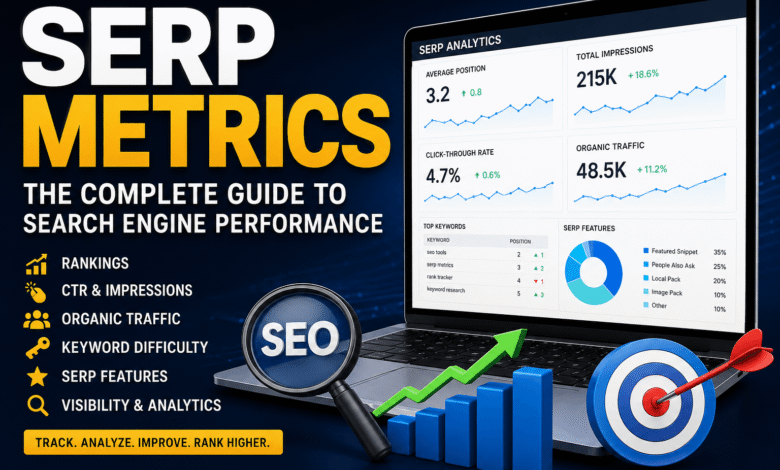
Introduction to SERP Metrics
In the world of search engine optimization, understanding how websites perform in search results is essential. One of the most important concepts that digital marketers, bloggers, and business owners need to understand is SERP metrics. These measurements provide valuable insights into how a webpage appears and performs on search engines.
Search engines use hundreds of factors to determine rankings, but tracking performance becomes much easier when marketers analyze the right data. By studying these indicators, website owners can identify strengths, uncover weaknesses, and improve their overall visibility online.
Whether you are running a personal blog, an e-commerce store, or a corporate website, knowing how to interpret search performance data can significantly improve your SEO strategy.
What Are SERP Metrics?
SERP metrics are measurements used to evaluate how a website or webpage performs on Search Engine Results Pages (SERPs). These indicators help determine visibility, ranking success, user engagement, and overall search performance.
When someone searches for a keyword, search engines display a list of relevant results. The effectiveness of a website within those results can be analyzed through various measurements that provide actionable insights.
These measurements allow marketers to understand how users interact with search listings and whether optimization efforts are producing positive results.
Why SERP Metrics Matter
Tracking search performance is important because rankings alone do not tell the full story. A website may rank highly for a keyword but receive little traffic if users are not clicking on the result.
Monitoring search data helps businesses:
- Measure SEO success
- Identify growth opportunities
- Improve content strategies
- Understand user behavior
- Increase organic traffic
- Strengthen online visibility
Without proper measurement, SEO decisions often become based on assumptions rather than facts.
Key SERP Metrics Every SEO Professional Should Track
Organic Ranking Position
Organic ranking position refers to where a webpage appears in search results for a specific keyword.
A higher ranking generally leads to increased visibility and more traffic. Websites appearing on the first page receive significantly more attention than those on later pages.
Tracking ranking positions helps website owners determine whether optimization efforts are improving search visibility.
Click-Through Rate (CTR)
Click-through rate measures the percentage of users who click on a search result after seeing it.
The formula is:
CTR = Clicks ÷ Impressions × 100
A high CTR usually indicates that the title and meta description are compelling and relevant to searchers.
Factors Affecting CTR
- Attractive titles
- Relevant descriptions
- Rich snippets
- Brand recognition
- Search intent alignment
Improving these elements can increase user engagement without changing rankings.
Impressions
Impressions represent the number of times a webpage appears in search results.
Even if users do not click on a result, an impression is still counted whenever the page is displayed.
High impressions with low clicks may indicate that a page needs better optimization to attract attention.
Organic Traffic
Organic traffic refers to visitors who arrive from unpaid search engine results.
This metric helps determine whether SEO efforts are driving actual visitors rather than simply improving rankings.
A steady increase in organic traffic often reflects successful content optimization and stronger search visibility.
Understanding Advanced SERP Metrics
Keyword Visibility
Keyword visibility measures how prominently a website appears across multiple keywords.
Instead of focusing on a single phrase, this metric evaluates overall search presence.
A website ranking for hundreds of relevant terms typically enjoys stronger visibility than one ranking for only a few keywords.
Search Volume
Search volume indicates how many times a keyword is searched within a specific period.
Higher search volume often means greater traffic potential. However, highly searched terms may also be more competitive.
Balancing volume and competition is a crucial aspect of successful keyword targeting.
Keyword Difficulty
Keyword difficulty estimates how challenging it may be to rank for a particular search term.
Several factors influence difficulty, including:
- Competition levels
- Authority of ranking websites
- Backlink profiles
- Content quality
Choosing keywords with manageable competition often provides faster ranking opportunities.
Average Position
Average position calculates the mean ranking of a webpage across multiple searches.
This metric provides a broader understanding of search performance over time rather than focusing on a single ranking snapshot.
SERP Features and Their Impact
Modern search results contain more than traditional blue links.
Featured Snippets
Featured snippets appear at the top of search results and provide direct answers to user queries.
Benefits include:
- Increased visibility
- Higher authority perception
- Improved traffic potential
Many websites optimize content specifically to earn featured snippets.
People Also Ask Boxes
These expandable question sections provide related queries that users frequently search.
Appearing within these sections can increase exposure and drive additional traffic.
Local Packs
Local packs display businesses relevant to geographic searches.
For local companies, appearing in these results can significantly increase customer inquiries and foot traffic.
Knowledge Panels
Knowledge panels provide detailed information about brands, organizations, and public figures.
They enhance credibility and improve user trust.
How SERP Metrics Influence SEO Strategy
Content Optimization
Performance data helps identify which content is succeeding and which pages require improvement.
Website owners can update underperforming content by:
- Expanding information
- Improving readability
- Adding relevant keywords
- Enhancing user experience
Competitor Analysis
Monitoring search performance allows businesses to compare their results with competitors.
This comparison helps identify:
- Keyword opportunities
- Content gaps
- Ranking advantages
- Market trends
Understanding competitor strengths can inspire more effective SEO strategies.
User Intent Matching
Search engines increasingly prioritize content that satisfies user intent.
Performance measurements help determine whether content aligns with what searchers are actually looking for.
Improved intent matching often leads to better rankings and increased engagement.
Common Mistakes When Analyzing SERP Metrics
Focusing Only on Rankings
Many marketers become obsessed with rankings while ignoring other important indicators.
A top ranking is valuable, but traffic, engagement, and conversions provide a more complete picture of success.
Ignoring CTR Data
Low click-through rates can signal problems with titles and descriptions.
Even high-ranking pages may underperform if users are not encouraged to click.
Neglecting Search Intent
Optimizing for keywords without considering user intent often results in poor engagement and lower performance.
Understanding what users want is just as important as targeting the right phrases.
Tracking Too Few Keywords
Monitoring only a handful of keywords may create an incomplete view of performance.
A broader keyword portfolio provides more reliable insights into overall visibility.
Best Practices for Improving SERP Metrics
Create High-Quality Content
Search engines reward content that provides value, answers questions, and satisfies user needs.
Quality content remains one of the strongest factors influencing search performance.
Improve Title Tags
Compelling titles attract more clicks and improve user engagement.
Effective titles should:
- Be descriptive
- Include target keywords naturally
- Encourage curiosity
- Match search intent
Enhance User Experience
User experience influences how visitors interact with a website.
Important factors include:
- Fast loading speed
- Mobile responsiveness
- Clear navigation
- Readable formatting
Better experiences often lead to improved search performance.
Optimize for SERP Features
Structuring content to answer questions clearly can increase the chances of appearing in featured snippets and other enhanced search elements.
This additional visibility can drive significant organic traffic.
Future Trends in SERP Metrics
Search engines continue to evolve rapidly. Artificial intelligence, voice search, personalized results, and advanced user behavior analysis are shaping the future of search.
As search technology improves, performance measurement will become increasingly sophisticated. Website owners must adapt by focusing on user satisfaction, content quality, and comprehensive optimization strategies.
The importance of understanding search performance indicators will continue to grow as competition for online visibility increases.
Conclusion
SERP metrics provide the foundation for effective search engine optimization. They help website owners understand how pages perform, how users interact with search results, and where improvements are needed.
By monitoring rankings, click-through rates, impressions, organic traffic, visibility, and search features, businesses can make informed decisions that improve online performance. Rather than relying on assumptions, these measurements provide actionable insights that lead to stronger SEO strategies and sustainable growth.
For anyone serious about improving search visibility, mastering SERP metrics is an essential step toward achieving long-term success in organic search.