Search Engine Basics: The Complete Guide to Understanding How Search Engines Work 76
Introduction to Search Engine Basics
The internet contains billions of web pages, making it impossible for users to find information manually. This is where search engines play a crucial role. Understanding search engine basics is essential for website owners, bloggers, digital marketers, students, and anyone interested in how online information is discovered.
A search engine is a powerful software system designed to help users locate relevant information across the web. Every day, billions of searches are performed to find answers, products, services, news, and educational content. Search engines analyze enormous amounts of data and deliver the most relevant results within seconds.
Learning search engine basics provides valuable insight into how websites appear in search results and why some pages rank higher than others. This knowledge forms the foundation of modern search engine optimization and digital marketing strategies.
What Are Search Engines?
A search engine is an online tool that helps users find information by entering keywords or phrases into a search box. The search engine then scans its database and displays pages that best match the user’s query.
Popular search engines include Google, Bing, Yahoo, DuckDuckGo, Baidu, and Yandex. While each platform uses its own technology and ranking methods, they all operate on the same fundamental principles.
The primary goal of any search engine is to provide users with accurate, useful, and relevant information as quickly as possible.
Search Engine Basics: How Search Engines Work
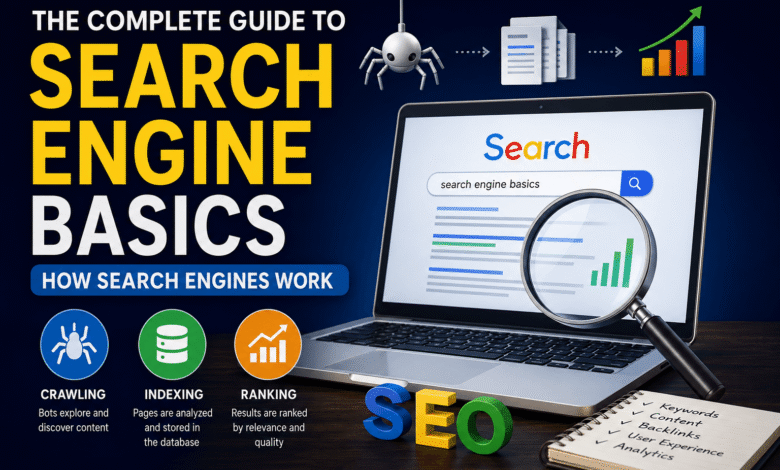
To understand search engine basics completely, it is important to learn the three major stages involved in the search process.
Crawling
Crawling is the first stage in which automated programs known as crawlers, spiders, or bots explore websites across the internet.
These bots continuously visit web pages and follow links from one page to another. Their purpose is to discover new content and identify updates made to existing pages.
Without crawling, search engines would not know that a website exists.
Indexing
Once content is discovered, the next step is indexing.
Indexing involves analyzing and storing information in a massive database called the search index. During this process, search engines examine various elements of a page, including:
- Page titles
- Headings
- Content
- Images
- Meta information
- Internal links
- Structured data
The search engine attempts to understand the topic and purpose of each page before adding it to its index.
Ranking
Ranking is the process of determining which pages should appear first when a user performs a search.
Search engines evaluate hundreds of ranking factors to determine relevance and quality. Pages that provide the best user experience and most helpful information generally receive higher rankings.
The ranking process occurs in a fraction of a second whenever a search query is submitted.
Why Search Engine Basics Matter
Understanding search engine basics offers several benefits.
Businesses can increase their online visibility. Bloggers can attract more readers. Website owners can improve organic traffic. Digital marketers can create better optimization strategies.
Without knowledge of how search engines function, it becomes difficult to compete in today’s online environment.
Search engine knowledge helps individuals make informed decisions regarding content creation, website structure, and user experience.
Key Components of Search Engine Basics
Several important elements influence how search engines evaluate websites.
Keywords
Keywords are words or phrases users enter into search engines.
For example, someone searching for information about website optimization may type a specific phrase into the search box.
Search engines use these terms to understand user intent and display relevant pages.
Content Quality
High-quality content remains one of the most important ranking factors.
Search engines prefer content that is:
- Accurate
- Helpful
- Original
- Well-structured
- Easy to understand
Pages that provide valuable information tend to perform better in search results.
Backlinks
Backlinks are links from one website pointing to another.
They act as signals of trust and authority. When reputable websites link to a page, search engines often view that content as more credible.
Quality backlinks can significantly improve ranking potential.
User Experience
Modern search engines focus heavily on user experience.
Important factors include:
- Fast loading speed
- Mobile responsiveness
- Easy navigation
- Secure connections
- Readable design
A positive user experience encourages visitors to stay longer and engage with content.
Search Engine Basics and Search Algorithms
Search algorithms are complex systems used to evaluate and rank web pages.
These algorithms consider numerous factors before displaying results. Their primary purpose is to deliver the most relevant and useful content to users.
Algorithms continuously evolve to improve search quality and reduce spam.
As technology advances, search engines become increasingly capable of understanding context, intent, and content quality.
Artificial Intelligence in Search
Artificial intelligence has transformed modern search technology.
AI helps search engines:
- Understand natural language
- Interpret search intent
- Identify quality content
- Deliver personalized results
This advancement has made search results more accurate and user-focused than ever before.
Different Types of Search Queries
Understanding user intent is a crucial aspect of search engine basics.
Informational Searches
Users seek information or answers to questions.
Examples include:
- How does a search engine work?
- What is digital marketing?
- Why is website speed important?
Navigational Searches
Users want to visit a specific website or page.
Examples include searches for a particular company, brand, or service.
Transactional Searches
Users intend to make a purchase or complete an action.
Examples include searching for products, services, or subscriptions.
Commercial Investigation Searches
Users research options before making a decision.
They compare products, services, features, and reviews before taking action.
Search Engine Basics and Website Optimization
Website optimization helps search engines understand content more effectively.
Creating Valuable Content
Content should focus on solving problems and answering questions.
Helpful content naturally attracts visitors and encourages engagement.
Optimizing Page Structure
A well-organized page improves readability and understanding.
Best practices include:
- Clear headings
- Logical structure
- Short paragraphs
- Relevant images
- Descriptive titles
Mobile Optimization
Most internet users access websites through mobile devices.
Search engines prioritize mobile-friendly websites because they provide a better user experience.
Improving Page Speed
Fast-loading pages improve visitor satisfaction and reduce bounce rates.
Website speed remains an important factor in search performance.
Common Search Engine Myths
Many misconceptions exist regarding search engines.
Myth 1: More Keywords Guarantee Higher Rankings
Keyword stuffing often harms performance rather than improving it.
Natural and helpful content is far more effective.
Myth 2: Rankings Stay Permanent
Search rankings constantly change due to competition, algorithm updates, and content improvements.
Myth 3: Search Engine Optimization Produces Instant Results
Optimization requires time, consistency, and ongoing effort.
Long-term strategies generally produce the best outcomes.
The Future of Search Engine Basics
Search technology continues to evolve rapidly.
Voice search, artificial intelligence, machine learning, and personalized experiences are shaping the future of online discovery.
Search engines are becoming better at understanding context and delivering highly relevant results.
As technology advances, websites must focus on quality content, user experience, and credibility to remain competitive.
Conclusion
Understanding search engine basics is essential for anyone involved in the digital world. Search engines help users navigate billions of web pages through sophisticated processes that include crawling, indexing, and ranking. By learning how these systems operate, website owners, marketers, bloggers, and businesses can improve visibility and create content that better serves users.
The foundation of successful online growth begins with understanding how search engines work. As technology continues to evolve, the principles behind search engine basics will remain critical for achieving long-term success in the digital landscape.